How to turn your own poems into songs with AI
Your poem is written, but you cannot yet hear its music? Start with the words: divide the story into sections, choose lines worth repeating and imagine the performance. Here is a short route from a finished poem to a first song version.
1. Separate a finished poem from an idea for new lyrics
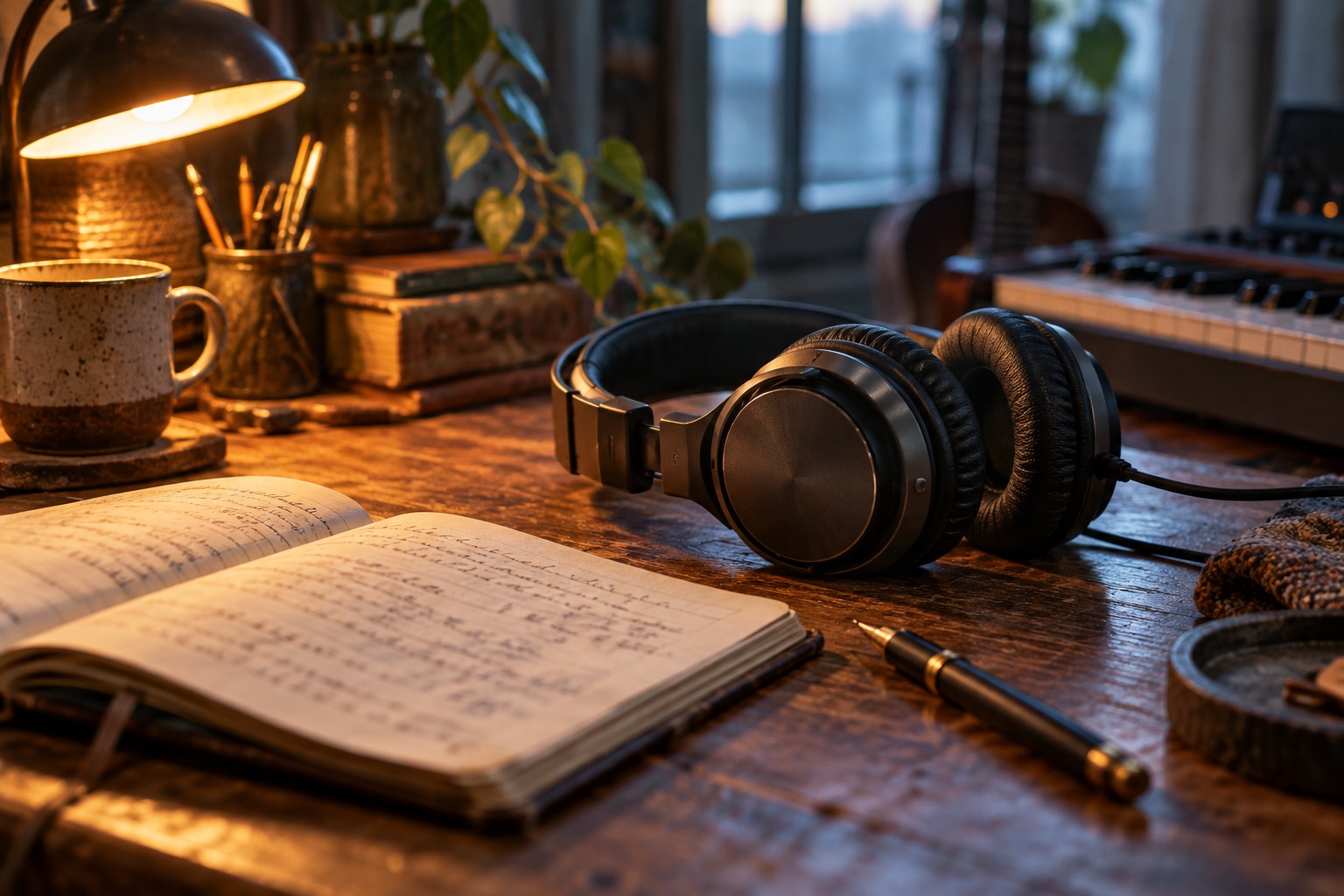
Hitzy lets you generate lyrics from a description or use your own. If you want to hear the lines you have written, choose the own-lyrics mode in the studio: put the poem in the lyrics field and describe the genre and mood separately. The idea mode is for creating new words, so do not put a finished poem there and expect a word-for-word performance.
First, save the original separately. In a working copy, remove the writing date, author signature and notes that should not be sung. Read the lines aloud: if you run out of breath halfway through a sentence, try splitting it. You do not need to rewrite the whole poem immediately — line breaks and a few cuts may be enough.
2. Find a structure that suits the text
A verse tells the story
Group lines about one moment or feeling. A new turn in the story can become the next verse. Similar line lengths can help with rhythm, but there is no rigid rule for every stanza.
A chorus brings back the main thought
Choose two to four lines expressing the main message. You can repeat them after the verses. If no passage fits, do not force a chorus: an intimate song can develop without one.
A pause gives words room
Do not try to sing every paragraph without a break. You can request a short introduction and a quiet ending in the music description. These suggestions guide generation but do not guarantee an exact arrangement.
An example: four lines and a possible chorus
Here is a short original example: 'The kitchen light stayed on till morning came, Our tea grew cold as memories wandered through. Outside, the winter hurried down the lane, We let the evening linger, me and you.'
All four lines could stay as a verse. For a chorus, choose the main thought and express it more briefly: 'Stay here with me a little longer, Let the snow wait by the door.'
This is an adaptation example, not a required change to your poem. If you want to keep every word, begin with the original stanza and no new chorus. You can mark sections with [Verse] and [Chorus]. They help suggest a structure, but you still need to listen: the model may repeat a line, shift emphasis or pronounce a word imperfectly.
3. Describe the music, not just the genre
An intimate sound for a personal poem
A calm acoustic ballad with gentle guitar and a little piano. Close, restrained vocals; the words should remain clear. A warm mood without dramatic anguish, with a short instrumental introduction.
A more rhythmic version of the same poem
A bright pop song with a steady, moderate rhythm and live drums. Quieter verses and a wider, more energetic chorus. Confident vocals without shouting, room for the lyrics and an arrangement that is not too dense.
4. Listen to the first version as its author
The examples above belong in the musical style field, not in the lyrics field or the idea-to-lyrics mode. Choose one direction and first decide whether it suits your poem. If the result feels too grand, request more conversational vocals; if words get lost, try a calmer tempo and simpler instrumentation.
Check more than the melody: can you hear the line endings, has emphasis changed the meaning, and is an important line missing? When revising, change one thing at a time — the structure, a long phrase or the music description. This makes it easier to understand what affected the result. Exact duration, pronunciation and a word-for-word AI performance cannot be guaranteed in advance.
If you only have the opening lines
Opening lines can be a starting point too. In Studio, choose lyrics from an idea: add your poem's beginning, explain where the story should go, and ask for complete lyrics with verses and a chorus. AI will suggest a continuation you can edit before creating the music.
The opening lines guide the result, but keeping them word for word is not guaranteed. If they must remain unchanged, check and edit the generated lyrics.
Try continuing your opening lines
From two lines to a complete song
My poem begins: ‘A warm light fills the window pane, / The evening brings me home again.’ Develop this into complete song lyrics about coming home and meeting someone dear. Include verses and a chorus, keep a warm mood and simple, vivid imagery.
Questions before your first attempt
Can every poem stay unchanged?
You can start with the original text. But a literary rhythm may not fit the chosen music comfortably: long lines or complex phrases may need adaptation. Keep the original and check the result by listening.
Do I have to write a chorus?
No. A chorus helps return to the main message but is not essential for every text. Try a song without one if your poem tells a complete story you do not want to interrupt with repetition.
Do I need to read music?
No. To start, you need your own text and a description of the sound in ordinary words: mood, tempo, instruments and vocal character.
Can I try it for free?
New users receive 20 gift tokens after registration to create a song.
Listen to what you can create
Community songs on different themes. Your song will tell your own story, in your own mood.


Hear how your words could sound
Save your poem, choose a mood and begin a first version. For finished poems, use the own-lyrics mode in the studio.
Ideas for a personal musical gift

A song for Mom
Create a personal song for your mom: a thank-you from her daughter or son, a celebration or a just-because gift. Find idea examples and tips for your own lyrics.

A birthday song
Create a birthday song with a name, shared memories and personal wishes. Find an idea, choose a mood and turn your story into music with Hitzy.

A March 8 song: a personal greeting without clichés
Original March 8 lyrics and ideas for a mother, someone close or colleagues. Create a personal greeting instead of a template: your first song is free.

A song for your wife about your real life
Original lyrics and ideas for your wife's birthday or an everyday surprise. Add shared memories and make a personal gift. Your first song is free.