
Write rap lyrics that sound like you
Your first rap verse needs more than an impressive rhyme list. Start with something you want to say and lines you can deliver comfortably. Build a short scene, write four lines and speak them to a steady pulse. That helps you find your own voice instead of borrowing someone else's.
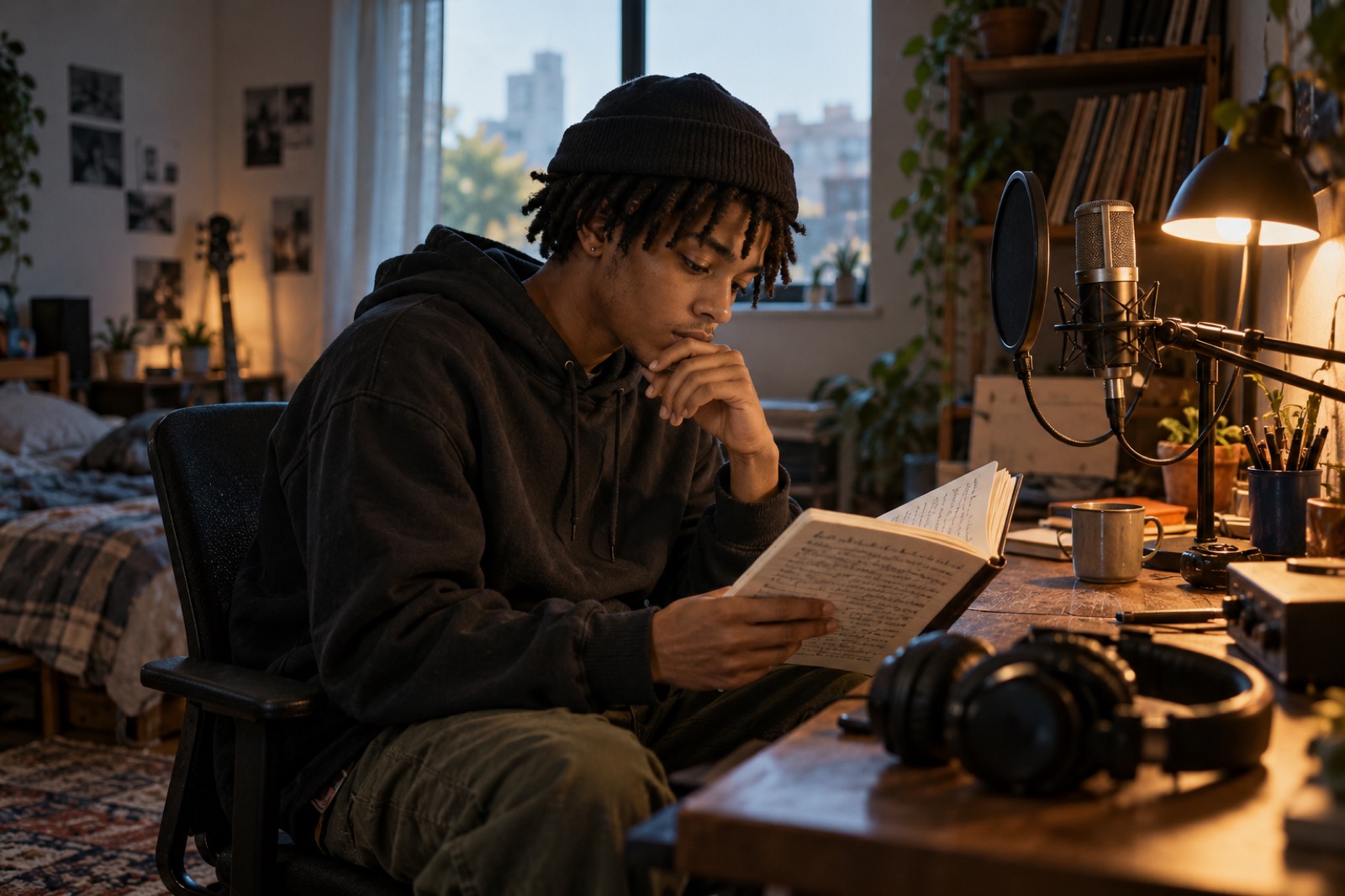
1. Choose a point of view
A song about the city is broad. Returning from a late shift and noticing how your old neighbourhood has changed gives you a speaker, a scene and a perspective. Decide whether you are talking to yourself, someone close or a listener who knows nothing about your life.
Write down an object, an action and a feeling: an empty tram, a light in a window, tiredness mixed with determination. Do not force a rhyme yet. These details give the verse something to show; one central thought can support the hook.
2. Find a rhythm you can repeat
Flow is how speech sits against the musical pulse: its accents, changes of pace and pauses. You do not have to fill every beat. Say a sentence naturally, then repeat it over steady claps or a simple beat.
If you rush to finish a line, cut the extra words. Replace 'I know for certain that it is finally time for me to go' with 'Time to go — I know'. The idea survives and the voice gets room. Matching every syllable count is optional; being able to repeat your intended rhythm matters more.
3. Add rhymes without losing the thought
Start by connecting the endings of two neighbouring lines. Then try an internal rhyme or a repeated sound within a phrase. A few clear anchors can be more expressive than a line packed with words nobody would normally say.
An original four-line draft: 'The last tram fades beyond the light, I walk the streets that raised me right. My keys are warm against my palm, I keep my pace, I keep my calm.'
This is a fictional exercise, not a hit-song formula. The pairs 'light — right' and 'palm — calm' are simple. Try different speaking speeds. If a word interrupts your delivery, replace it: a rhyme has to work in your voice, not just on paper.
4. Let the hook carry one thought
The verse shows what happens; the hook returns to what it means. A short phrase such as 'I know my way — one step today' can be enough. A hook does not have to be long or sung: a repeated spoken line can hold the track together.
Give the second verse a change rather than another list of objects. The narrator meets someone familiar, sees a light at home or makes a small decision. That creates movement without requiring a complicated plot.
Two starting points for your own rap
A small step, not a grand promise
Write original English rap lyrics in the first person. The narrator is walking home after a late shift: the last tram is gone, keys are in a pocket, a window at home is still lit. They are tired but proud they did not give up on their work. Two verses and a short spoken hook about the next small step. Natural conversational language, clear rhymes and room for pauses. No boasting and no imitation of a particular performer.
Build from your opening lines
Develop this opening into an original English rap: 'Morning hums beyond the station / I'm piecing up my concentration'. The narrator is learning to live in a new city: coffee by the train, unfamiliar streets, a first call to an old friend. Verse one feels uncertain; verse two finds a little confidence. A short hook about gradually finding your rhythm. You may revise the opening for flow while keeping its mood. Use everyday language and gentle self-deprecating humour.
5. Turn the draft into a track
With finished lyrics, open the Hitzy studio and choose the own-lyrics mode. Separate verses and the hook with blank lines, then choose rap or hip-hop separately as the musical style. Keep production directions out of the words themselves.
If you only have a story, use a starting point above and replace the fictional details. Review the lyrics before creating music. AI delivery may differ from what you imagined: listen for misplaced emphasis and lost meaning. For a revision, change one problem at a time instead of replacing everything.
Questions about your first rap
Do I have to rap fast?
No. Start at a comfortable conversational speed. Fast delivery is not a substitute for a clear thought and expressive pauses.
What if a rhyme looks good but sounds awkward?
Say it against a steady pulse. Remove extra words or change the order without forcing unnatural pronunciation.
Can AI help me write a rap?
Yes. Describe a speaker, a concrete scene and the hook's main thought. Edit the draft with your own details and check it aloud.
Can I start for free?
Yes. New users receive 20 gift tokens after registration to create their first free song. Start with your lyrics or a short idea.
Listen to what you can create
Community songs on different themes. Your song will tell your own story, in your own mood.





Give your story a voice
Start with four lines or one scene. Use an idea above or bring your draft into the studio.
Keep working on your song
How to write song lyrics
Find your main idea, draft verses and a chorus, check the rhythm and prepare an AI brief. An original example and a practical route to your first song in Hitzy.
Turn your poetry into a song
A practical guide to preparing your poem for a song, finding a chorus and describing the musical style. Includes a structure example and tips for checking the result.
How to write a verse: a scene instead of generalities
Choose a scene, show an action and remove generic lines from a song verse. An original draft comparison, exercise and ideas. Create your first song free.

Song structure: what each section does
Learn what verses, choruses, pre-choruses and bridges do. Try two simple song outlines and a practical way to arrange your story before creating it in Hitzy.