
Create your first beat without overloading it
A beat is more than lots of drum sounds at once. For a first attempt, steady movement and clear accents matter more. Decide whether you want a backing for lyrics, a rehearsal reference or a standalone instrumental: each needs a different approach.
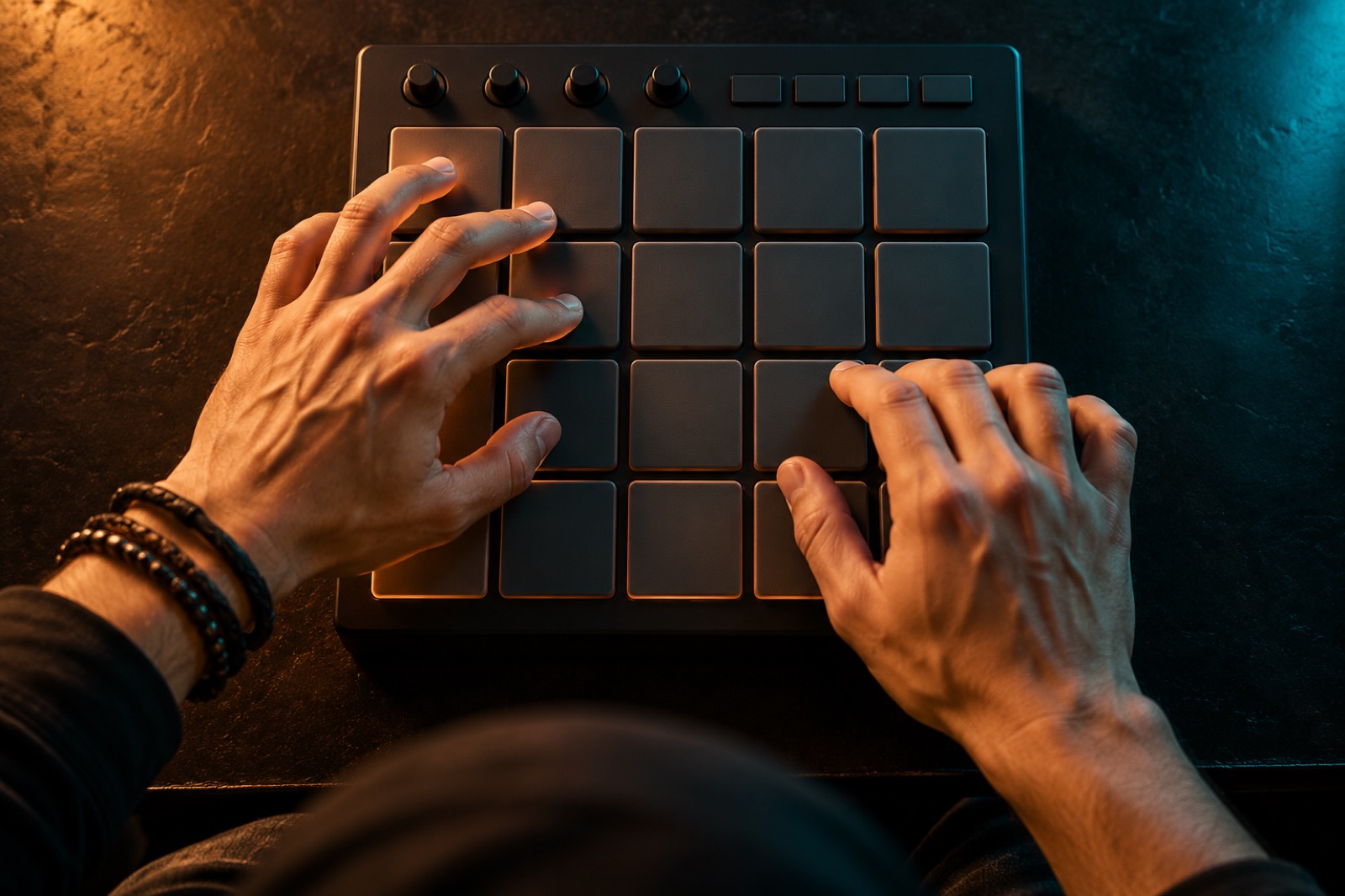
Start with four counts
Count “one, two, three, four” evenly and repeat it. Mark the first and third beats with a hand tap and the second and fourth with another sound, such as a light clap. This is a simple exercise in steadiness, not a compulsory pattern for every genre.
Do not add too many flourishes immediately. Extra sounds will not clarify a pattern that is hard to repeat. Learn one short rhythm, then try a small variation at the end of a phrase.
What each layer does
A low hit
It helps establish anchor points. It does not need to fill every empty space.
A clear accent
A clap or snare can mark the pattern. Place it so the rhythm still makes sense without all the decorations.
Smaller movement
Hi-hats and light percussion add movement between accents. Simplify them if they take all the attention.
Bass and harmony
Low notes and musical texture complement the drums. They do not need to remain equally dense throughout; leave room for words.
Test the beat with one original line
Try this new line: “I turn down the noise and choose my own way.” Say it over an even count. Where does emphasis naturally fall: on “noise,” “choose” or “way”? Try two versions without rushing your voice just to fit the pattern.
If every sound demands attention, there is little room for lyrics. Remove a layer or leave a more open passage for the verse. A standalone instrumental may need a different density; test the actual task.
Two musical descriptions to try
An open backing for rap
An instrumental hip-hop backing for a calm spoken vocal. Clear but sparse drums, warm bass and short soft chords. No vocals or long lead melody. Leave space for words, with a focused, confident mood.
A springy standalone groove
An electronic instrumental with a springy rhythm, short bass phrases and clean synth accents. No vocals. A repeatable musical idea with small variations, without sudden dramatic transitions.
Choose the tool for the control you need
Placing every hit precisely and editing separate tracks belongs in a sequencer or music editor. Hitzy lets you try an instrumental result from a description: copy the chosen musical request manually into Instrumental.
These approaches are different. Separate drum stems, MIDI, an exact bar pattern and a specified BPM are not promised here. Treat the result as a musical direction to test with your own lines.
Do I need a complex melody first?
No. Establish the rhythmic foundation. A simple musical phrase may leave more space for a voice than several competing lead melodies.
Can I try without formal music training?
A first experiment can begin with steady counting, careful listening and a small pattern. More detailed editing requires learning your editor’s tools.
How do I reproduce the exact pattern I tapped?
Use a music editor to place hits precisely. A generator description guides the sound, but it does not turn your tapped pattern into exact notes.
Listen to what you can create
Community songs on different themes. Your song will tell your own story, in your own mood.



Try your own rhythmic direction
✨ Your first song is free. Start with your lyrics or try a musical description in the studio.
More ideas and guides

Write rap lyrics
Write your first rap verse with practical rhythm and rhyme exercises, an original example and editable AI prompts. Start your first song for free.

Find a melody
Try a short vocal motif, change one rhythmic detail and check what feels comfortable. Understand the difference between your melody and an AI song idea.
How to write a verse: a scene instead of generalities
Choose a scene, show an action and remove generic lines from a song verse. An original draft comparison, exercise and ideas. Create your first song free.

Song structure: what each section does
Learn what verses, choruses, pre-choruses and bridges do. Try two simple song outlines and a practical way to arrange your story before creating it in Hitzy.